High-rise construction presents unique challenges, especially when it comes to foundation pouring. Ensuring structural integrity for multi-story B2B builds requires precise and efficient concrete placement, often at significant heights or in restricted areas. Navigating the options for delivering concrete can be complex, with large boom pumps and stationary line pumps each offering distinct advantages. Rushing Pumping is dedicated to helping contractors make informed decisions that ensure project success from the ground up.
The Advantages of Large Concrete Boom Pumps for High-Rise Foundations
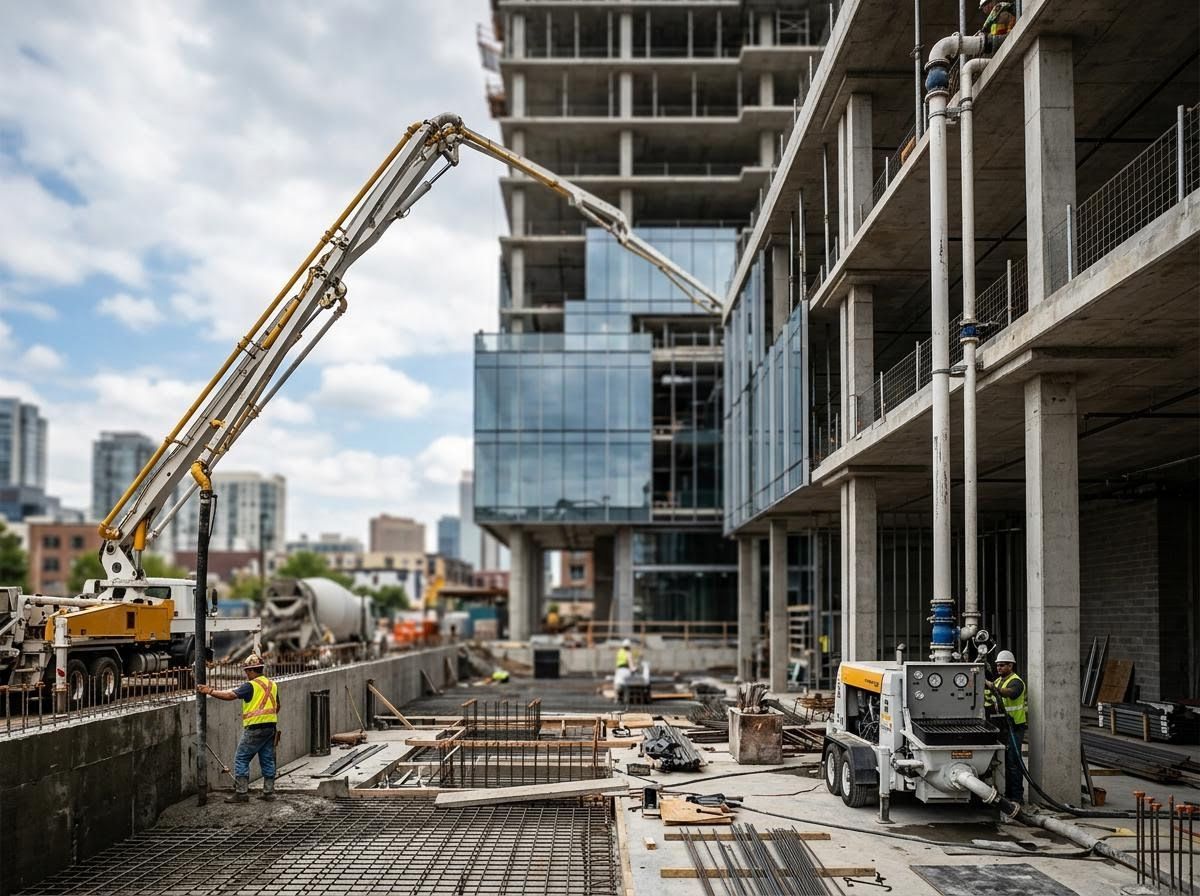
Large concrete boom pumps are a common sight on construction sites, known for their versatility and reach. These powerful machines excel at placing high volumes of concrete quickly and accurately over a wide area, making them ideal for many high-rise foundation pours. Their articulated booms can navigate over obstacles and reach deep into excavation sites, providing flexibility that stationary pumps might not offer in initial stages. For projects requiring significant horizontal and moderate vertical reach, a strategic Concrete Boom Pump Rental can drastically reduce labor and placement time, enhancing overall site efficiency. When looking to hire a Concrete Boom Pump for your project, it’s crucial to consider the boom's reach and pump output to match your specific job requirements.
Stationary Line Pumps: Precision and Power for Vertical Pours
When a project scales to extreme heights or involves very confined spaces, stationary line pumps often become the preferred choice. These systems utilize a series of pipelines that can be extended vertically, allowing concrete to be pumped hundreds of feet into the air. While setup can be more involved, stationary pumps offer consistent, high-pressure delivery over long distances and heights, making them indispensable for truly towering structures where the reach of a boom pump may be limited. They are particularly effective when the pour point is fixed for extended periods or when site access prohibits large mobile equipment near the pour location.
Deciding Between Boom Pumps and Stationary Lines
The choice between a large boom pump and a stationary line pump hinges on several critical factors specific to your multi-story B2B build. Project height is paramount; while boom pumps offer impressive vertical reach, extremely tall structures often necessitate the power of a stationary system. Site access and layout also play a significant role, as boom pumps require ample space for setup and operation, whereas line pumps can utilize smaller footprints. Furthermore, considering the volume of concrete, desired pour speed, and the overall project schedule will help determine the most efficient and cost-effective solution. For projects in Concrete Pumping Birmingham Alabama, Concrete Pumping Tuscaloosa Alabama, or Concrete Pumping Montgomery Alabama, understanding these nuances is key to optimizing your concrete delivery strategy.
Conclusion
Selecting the appropriate concrete pumping method for high-rise foundations is a critical decision that impacts project timelines, safety, and budget. Both large boom pumps and stationary line pumps offer powerful solutions, each with unique benefits tailored to different project scopes and site conditions. By carefully evaluating your project’s specific demands, you can ensure a smooth, efficient, and successful concrete pour. To explore the best concrete pumping solutions for your next high-rise venture, we invite you to learn more about Rushing Pumping’s advanced equipment and expert services.